
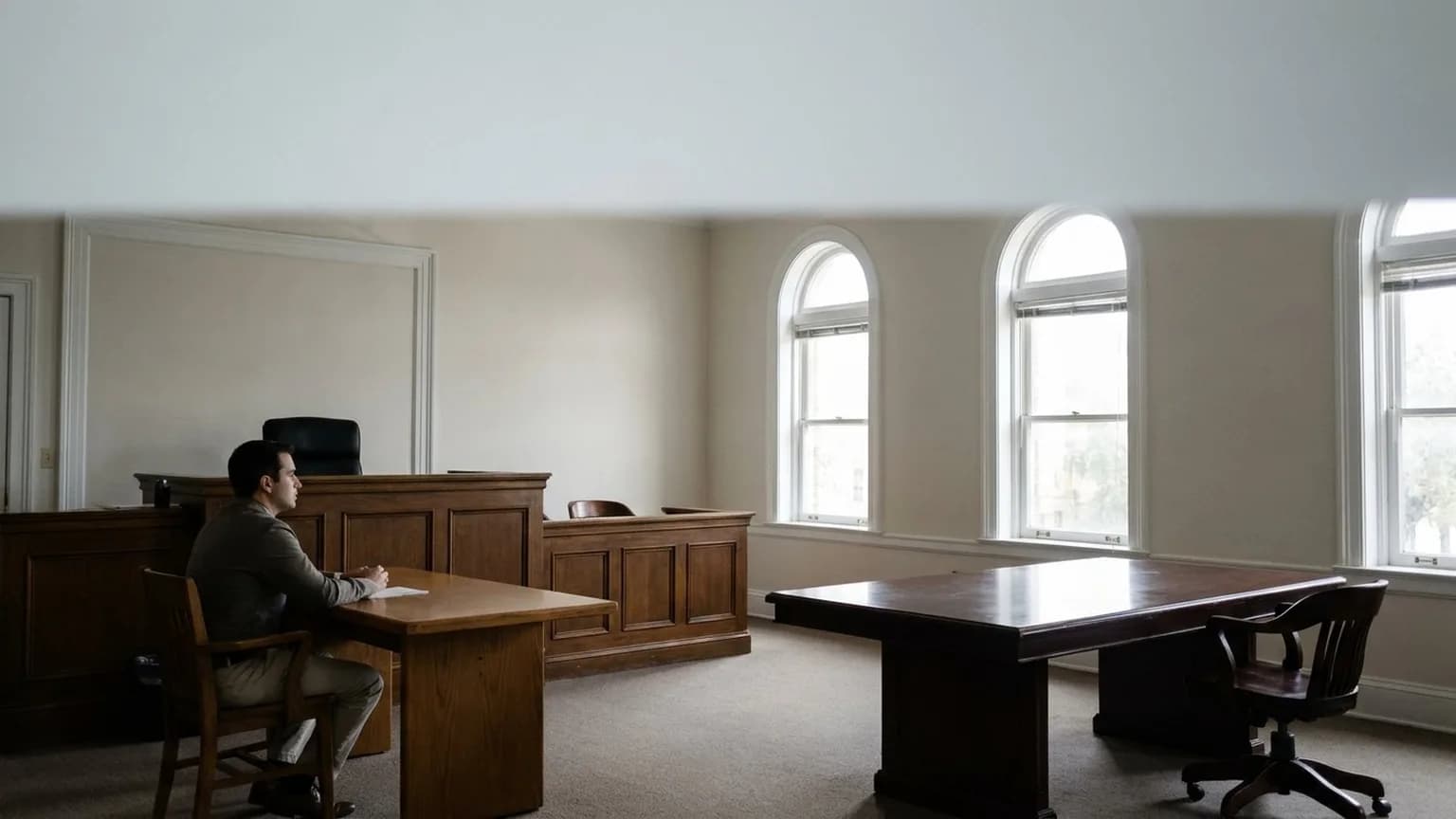
What If the Defendant Doesn't Show Up in Florida Small Claims Court?
If a served defendant misses court, Florida Rule 7.170 entitles the plaintiff to a default; the judge then takes evidence of damages and enters judgment.
 By Erez Vega KadochNovember 20, 20265 min read
Quick answer
If a properly served defendant does not appear at the scheduled time, Florida Small Claims Rule 7.170(a) entitles the plaintiff to a default, entered by the judge or the clerk. The judge then receives evidence of your damages and enters judgment based on the evidence and the law (Rule 7.170(b)).
A default is not automatic money. You still need to prove the amount, and service must have been completed.
Why the first court date matters
In Florida small claims, the first appearance is a pretrial conference, set by the clerk no more than 50 days after filing (Rule 7.090(b)). Both sides must appear personally or through counsel, in person or by communication technology as allowed (Rule 7.090(a)). The official summons, Form 7.322, warns:
“The defendant(s) must appear in court on the date specified in order to avoid a default judgment. The plaintiff(s) must appear to avoid having the case dismissed for lack of prosecution.”
Filing a written motion or answer does not excuse a party's personal appearance at the pretrial conference (Rule 7.090(c)).
Who doesn't show, and what can happen
| Who is absent | Possible result | Rule |
|---|---|---|
| Defendant | Plaintiff is entitled to a default; judge takes evidence of damages and enters judgment | 7.170 |
| Plaintiff | Case may be dismissed for want of prosecution, the defendant may proceed to trial on the merits, or the case may be continued | 7.160(a) |
| Both | Judge may continue the case or dismiss it for want of prosecution | 7.160(b) |
First, confirm service
A default depends on proper service. If the summons was not served and the return of non-service is filed 5 days before the pretrial conference, the court cancels the conference as to that party, and you may request a new summons with a new date (Rule 7.090(b)). If service is not made within 120 days after filing, the court must direct service within a set time or dismiss that party without prejudice, unless you ask for more time before the 120 days run (Rule 7.070(b)).
What to bring to prove damages
The court commentary to Rule 7.170 says evidence may be "by testimony, affidavit, or other competent means." Bring:
- the contract, invoice, lease, receipt or check your claim is based on;
- photos, estimates or repair bills;
- a simple written calculation of the amount you are asking for; and
- proof of service on the defendant.
The judge may also look into whether venue is being abused before entering judgment (Rule 7.170(b)).
Costs and attorneys' fees
Under Rule 7.175, a party usually must serve a motion for costs or fees within 30 days after the judgment is filed. In a default judgment, no further motion is needed if costs or fees were requested in the statement of claim. Filing fees vary by county; for example, the Pasco County Clerk lists $300 for claims over $2,500 up to $8,000.
Can the defendant undo the default?
- Motion for new trial: must be filed within 15 days after the judgment in a nonjury case (Rule 7.180(a)).
- Relief from judgment: the court may relieve a party from a judgment for reasons including mistake, inadvertence, surprise or excusable neglect; for those reasons the motion must be made within a reasonable time and not more than 1 year after the judgment (Rule 7.190(b)).
Keep your evidence even after you win.
After the judgment
- Execution: must issue during the life of the judgment on oral request, without a written demand, but not until the time for a new-trial motion has passed or a timely motion is decided, unless the court orders otherwise (Rule 7.200).
- Fact Information Sheet: at your request, the judge must order the debtor to complete and serve Form 7.343 within 45 days of the order, or another reasonable time the court sets (Rule 7.221(a)).
- Hearing in aid of execution: available at the request of a judgment creditor who is a natural person and was not represented by an attorney before judgment (Rule 7.221(b)).
As the Duval County Clerk notes, the courts do not collect judgments for you.
Related questions
What if the defendant shows up late?
The rules do not set a grace period. Ask the judge how to proceed.
What if the defendant sends a lawyer instead?
Appearance by counsel counts as an appearance (Rule 7.090(a)).
Ready to file your Florida small claims case? Flash Justice prepares your statement of claim from your answers and files it with the court, in English or Spanish.
Start NowSources
**Disclaimer:** Flash Justice is not a substitute for the advice of an attorney, and does not establish an attorney-client relationship. Flash Justice does not provide legal advice and does not exercise legal judgment on your behalf. This article is for informational purposes only. If you are unsure whether small claims court is right for your situation, we recommend consulting with a licensed attorney.
Related Articles

How Much Can I Sue a Contractor for in Florida? Explained
Calculate Florida contractor claims for lost deposits, repair costs, property damage, related expenses, interest, and court costs.

Sue Landlord for Security Deposit Florida: Filing Steps
A Florida-specific roadmap for recovering a withheld security deposit, from filing and service through mediation and trial.

Personal Loan Demand Letter Florida: Before You Sue
Learn how to demand repayment of a personal loan in Florida, document delivery, set a deadline, and prepare for small claims.