
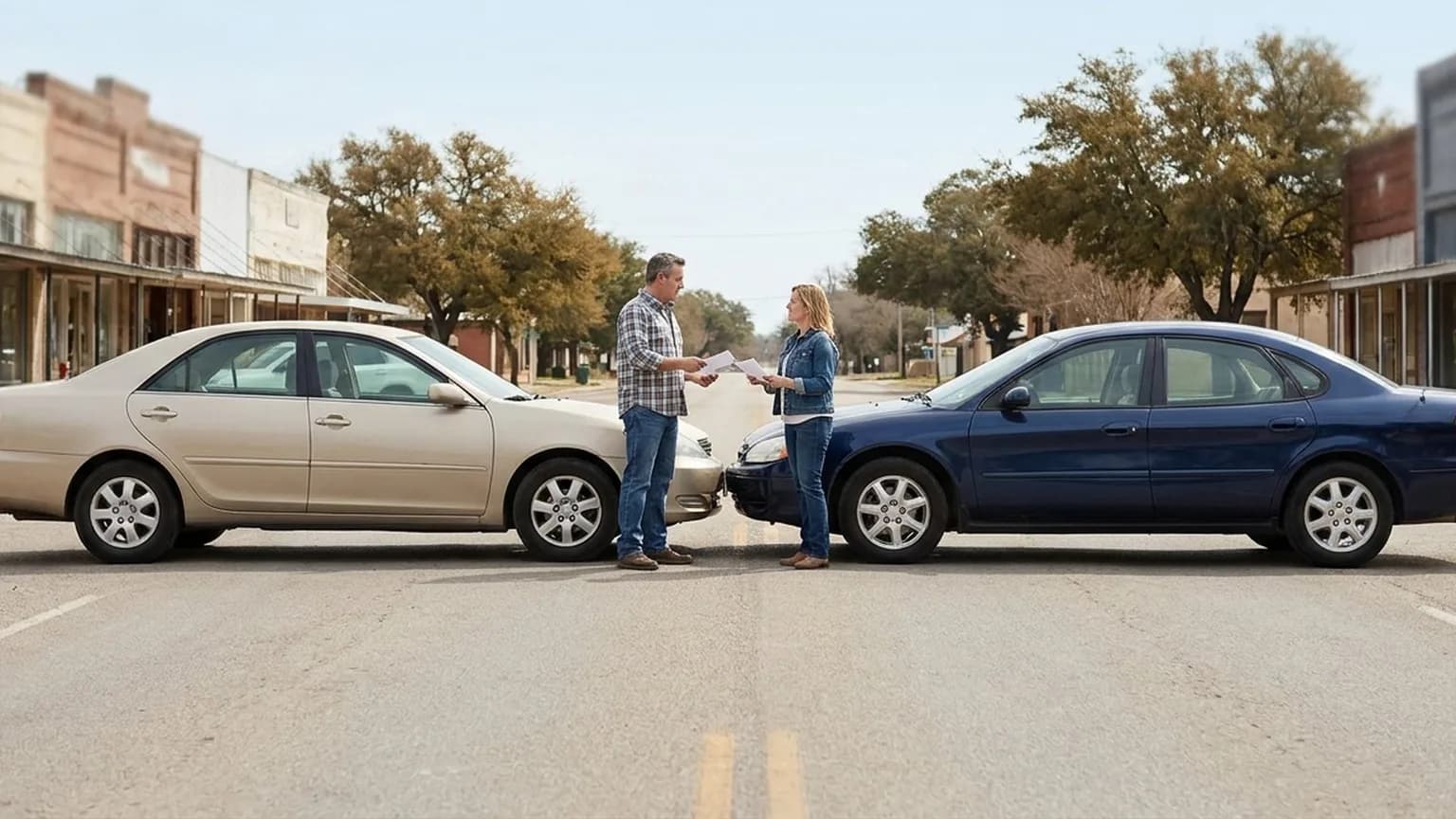
Can I Sue for a Car Accident in Texas Small Claims Court?
Yes, if your damages are $20,000 or less. Most Texas car accident suits for property damage or injury must be filed within two years.
 By Erez Vega KadochNovember 20, 20265 min read
Quick answer
Yes, if your damages are $20,000 or less. Texas justice courts hear civil cases up to $20,000, and a car accident claim is not on the list of cases they cannot hear under Texas Government Code section 27.031. Suits for property damage or personal injury generally must be filed within two years.
The limits that apply
| Issue | Rule | Source |
|---|---|---|
| Maximum claim | $20,000, excluding statutory interest and court costs but including attorney fees | Tex. R. Civ. P. 500.1(a) |
| Cases a justice court cannot hear | Including suits for slander or defamation, divorce, and title to land | Gov't Code sec. 27.031(b) |
| Filing deadline | Two years after the claim accrues for personal injury and injury to another's property | CPRC sec. 16.003(a) |
If your losses are more than $20,000, the case belongs in a court with higher limits.
Information the other driver must give you
Under Texas Transportation Code section 550.023, a driver in a collision that injures someone or damages a vehicle that is driven or attended by a person must give their name and address, the vehicle registration number, and the name of their liability insurer, and, if requested and available, show their driver's license. Texas's minimum liability coverage is $30,000 for injury to one person, $60,000 for two or more people, and $25,000 for property damage per collision (Transportation Code section 601.072).
Getting the crash report
An officer who investigates a collision that causes injury, death, or apparent property damage of $1,000 or more to any one person must file a written report (sec. 550.062). Under sec. 550.065(c), the report is released on written request and payment of any fee to people directly concerned in the collision, including any person involved, a driver, and the owner of a vehicle or property damaged.
Where to file
Under Rule 502.4(b), you can generally file in the county and precinct where the defendant resides or where the incident occurred. If the defendant is not a Texas resident, Rule 502.4(c) allows filing where you reside. For a nonresident driver, CPRC section 17.062 makes the chair of the Texas Transportation Commission an agent for service of process in a suit arising from a collision in Texas.
Evidence to gather
- The crash report, if one was made
- Photos of the scene, vehicles and injuries
- Repair estimates, invoices, towing and rental receipts
- Medical bills, if you are claiming injury
- Names and contact details of witnesses
- Texts, emails or letters with the other driver or their insurer
Under Rule 500.1(e), the Texas Rules of Evidence generally do not apply in small claims cases unless the judge decides a rule must be followed for fairness, or another law or rule requires it. You still need to prove fault and the amount of your loss. If a witness will not come voluntarily, Rule 500.7 lets you request a subpoena.
Step by step
- Total your losses and confirm they are $20,000 or less.
- Check the two-year deadline from the date of the accident.
- Identify the correct defendant by full legal name and address.
- Choose the court using Rule 502.4.
- File the petition with the information required by Rule 502.2(a), including the amount sought and the basis of your claim.
- Pay fees or file a Statement of Inability to Afford Payment of Court Costs. Fees vary by county; for example, Dallas County JP 3-1 lists a $54 filing fee effective January 1, 2026.
- Arrange service of the citation (Rule 501.2).
If the other driver doesn't respond
An answer is due by the end of the 14th day after service (Rule 502.5(d)). If none is filed, a car accident claim usually is not based on a signed document, so under Rule 503.1(a)(2) you must request a hearing, attend, and prove your damages. If you cannot prove them, the judge must rule for the defendant.
Related questions
Can I sue if no police report was made?
Nothing in the small claims rules requires a police report. You can rely on photos, witnesses, and other evidence.
Can the other driver countersue?
Yes. Rule 502.6(a) lets a defendant file a counterclaim within the justice court's jurisdiction.
Is two years always the deadline?
Not always. Special rules, such as for minors, can change it. See Chapter 16 or ask a lawyer if you are close to the deadline.
Ready to file your Texas small claims case? Flash Justice prepares your petition from your answers and files it with the court, in English or Spanish.
Start NowSources
- Texas Government Code, Chapter 27 (justice courts)
- Texas Rules of Civil Procedure (Part V covers justice court cases)
- Texas Civil Practice and Remedies Code, Chapter 16 (limitations)
- Texas Transportation Code, Chapter 550 (accidents and accident reports)
- Texas Transportation Code, Chapter 601 (motor vehicle liability insurance)
- Texas Civil Practice and Remedies Code, Chapter 17 (parties and service)
- Dallas County Justice Court 3-1: civil fees effective January 1, 2026
**Disclaimer:** Flash Justice is not a substitute for the advice of an attorney, and does not establish an attorney-client relationship. Flash Justice does not provide legal advice and does not exercise legal judgment on your behalf. This article is for informational purposes only. If you are unsure whether small claims court is right for your situation, we recommend consulting with a licensed attorney.
Related Articles
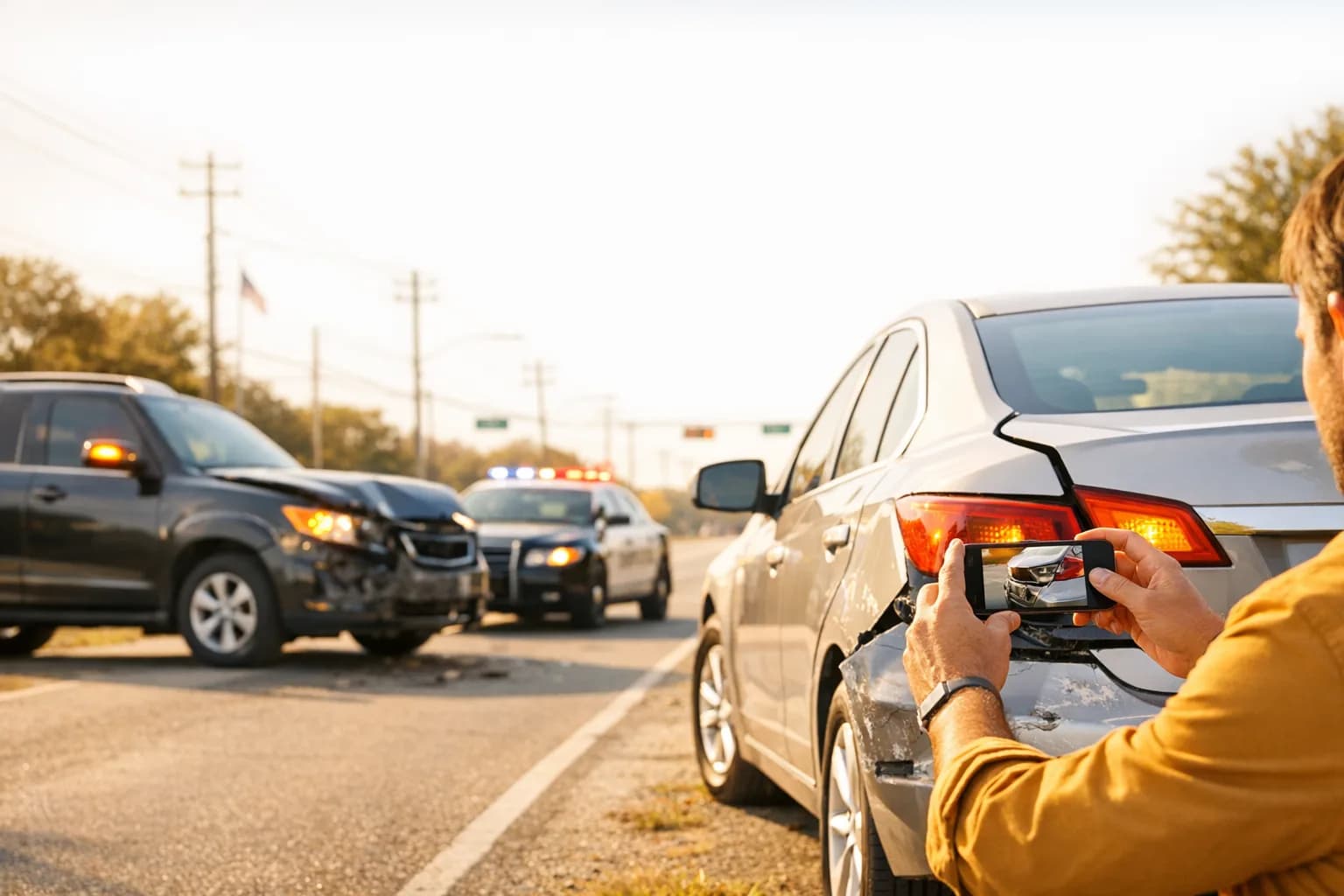
What to Do After a Not-Your-Fault Crash in TX
A practical Texas checklist for not-at-fault crashes: evidence, insurance, repairs, and when to use small claims court to recover vehicle damage.
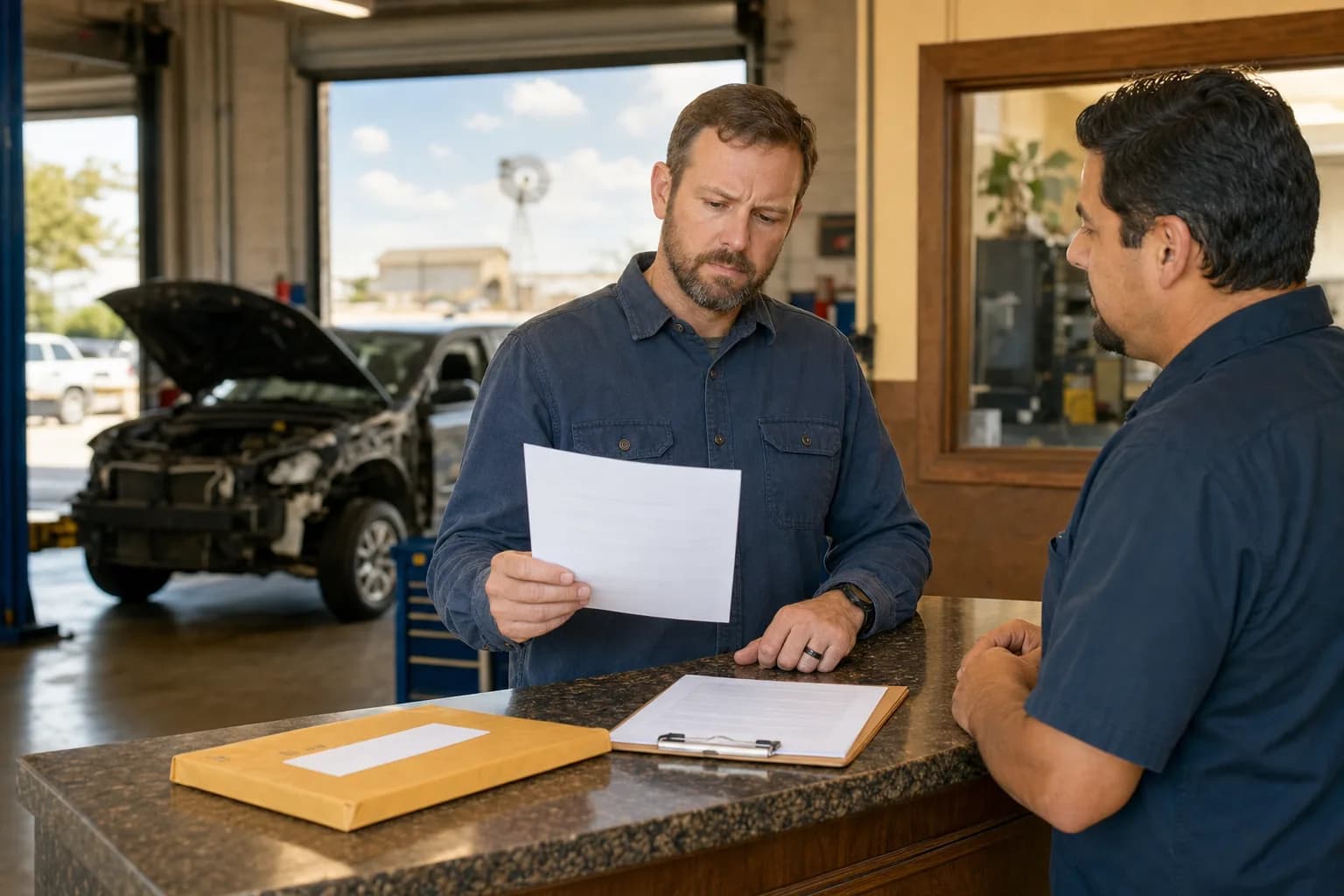
Mechanic Demand Letter Texas: How to Get Your Car Back
Learn what to put in a Texas mechanic demand letter, how to send it, and when the DTPA's 60-day notice rule may apply.
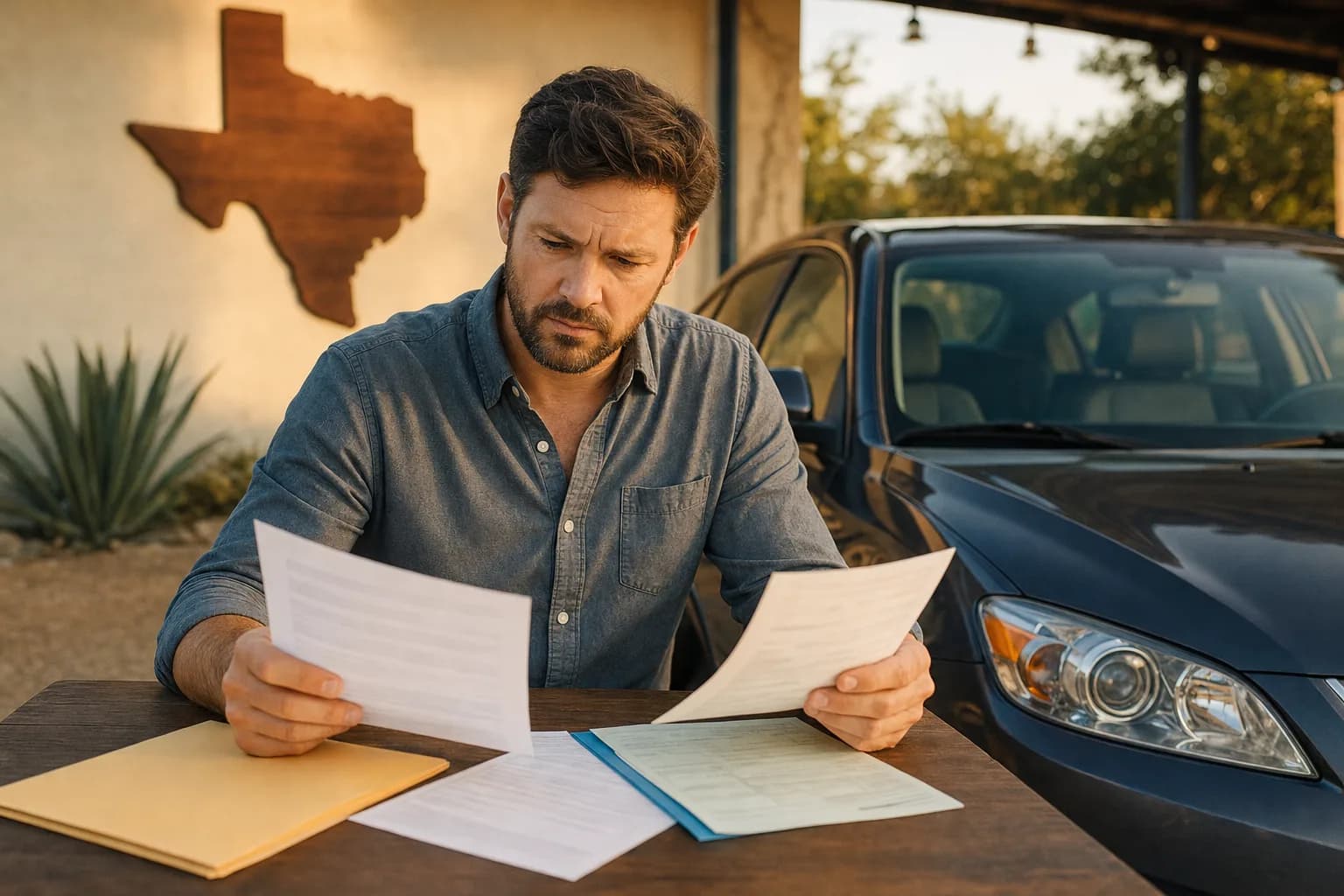
How Much Can I Sue a Used Car Dealer for in Texas?
Learn which losses Texas buyers can claim after a used car deal involving hidden defects, missing title, or nondelivery.